
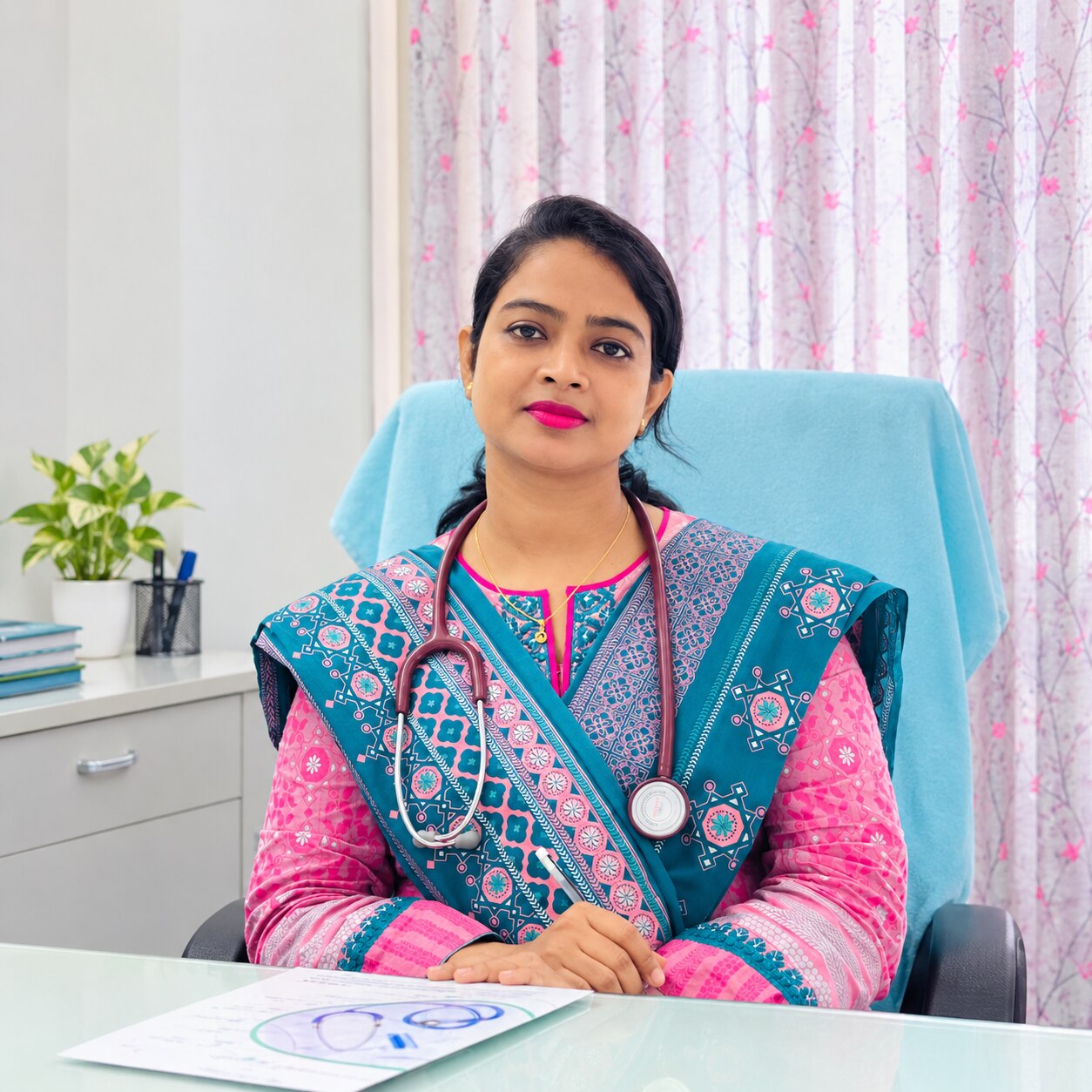
MBBS (MMC), BCS (Health), MS (Gyne & Obs)
Gynecology, Obstetrics, Infertility Specialist & Laparoscopic Surgeon
🎯 Pregnancy care, Ovarian cysts, PCOS treatment, Menstrual disorders, Fibroid surgery
View Profile →Compare verified Obstetrician & Gynecologist doctors across Khulna Division — degrees, chambers, visiting hours & fees in one place.
An obstetrician-gynecologist, often shortened to OB-GYN, cares for the female reproductive system across every life stage, from a first period to pregnancy to menopause. Obstetrics covers pregnancy, labor and delivery, while gynecology covers the broader reproductive system, including menstrual disorders, infections, fibroids and cancer screening. Many doctors practice both together.
MBBS (MMC), BCS (Health), MS (Gyne & Obs)
Gynecology, Obstetrics, Infertility Specialist & Laparoscopic Surgeon
🎯 Pregnancy care, Ovarian cysts, PCOS treatment, Menstrual disorders, Fibroid surgery
View Profile →MBBS (DMC), FCPS (Obs & Gyne), BCS (Health), DGO, MRCOG (UK)
Gynecology, Obstetrics Specialist & Surgeon
🎯 Normal delivery, Pelvic pain, Cervical screening, Hormone imbalance, Ectopic pregnancy
View Profile →MBBS, BCS (Health), MS (Gyne & Obs)
Gynecology, Obstetrics Specialist & Laparoscopic Surgeon
🎯 High-risk pregnancy, Endometriosis care, Infertility treatment, C-section delivery, Uterine prolapse
View Profile →MBBS, FCPS (OBGYN), MS (OBGYN)
Diploma in Assisted Reproductive Technology (ART) (India)
Gynecologist, Infertility, IVF, Test Tube Baby Specialist
Gyne Laparoscopic & Hysteroscopic Surgeon
🎯 Test Tube Baby Specialist, IVF, Ovarian Cancer, Tubal Blockage, Postpartum Care, Pap Smear
View Profile →MBBS, DGO, FCPS (OBGYN)
Gynecology, Obstetrics Specialist & Surgeon
🎯 Irregular periods, Uterine fibroids, Fertility care, Tubal ligation, High-risk delivery
View Profile →MBBS, DGO, MCPS (Obs & Gyne)
Upper Obstetric Gynecologist
Infertility Specialist & Laparoscopic Surgeon
🎯 Irregular periods, Uterine fibroids, Fertility care, Tubal ligation, High-risk delivery
View Profile →MBBS, BCS (Health), FCPS (OBGYN)
Gynecology, Obstetrics, Infertility, & IUI Specialist
Laparoscopic and Hysteroscopic Surgeon
🎯 Ovarian dysfunction, Endometrial hyperplasia, Contraceptive counseling, Vaginal discharge, Amniocentesis testing
View Profile →MBBS (DMC), BCS (Health), FCPS (OBGYN), MRCOG (UK), MSc (Clinical Embryology)
Infertility, Obstetrics, Gynecology Specialist & Surgeon
🎯 Prenatal care, Menopause management, PCOS management, Hysterectomy surgery, Vaginal infection
View Profile →Short Introduction
This guide explains what an obstetrician-gynecologist treats, from menstrual and pregnancy care to menopause and gynecological surgery. It covers common conditions, when to seek care, and what to expect from an exam or a pregnancy check-up.
Key Takeaways
Table of Contents
Conditions an OB-GYN Treats
When to See an OB-GYN
Pregnancy and Prenatal Care Explained
Prenatal visits typically begin once pregnancy is confirmed and continue on a regular schedule, becoming more frequent as the due date approaches.
Menstrual and Hormonal Conditions Explained
PCOS involves a hormonal imbalance that can cause irregular periods, acne and difficulty conceiving. Diagnosis usually combines symptoms, blood tests and ultrasound findings.
Fibroids are non-cancerous growths in or around the uterus. Many cause no symptoms and don't need treatment, while others cause heavy bleeding or pain requiring monitoring or intervention.
Endometriosis occurs when tissue similar to the uterine lining grows outside the uterus, often causing pelvic pain, particularly around menstruation, and sometimes affecting fertility.
Fertility and Family Planning
Diagnostic Approach
Treatment Approaches
Preparing for a First Visit
Warning Signs That Need Urgent Care
Quick-Reference Table
| Concern | Typical signs | When to see the specialist |
|---|---|---|
| Irregular periods | Unpredictable cycle, heavy or light flow | Persisting more than a few cycles |
| Fibroids | Heavy bleeding, pelvic pressure | Symptoms affecting daily life |
| PCOS | Irregular periods, acne, difficulty conceiving | Any combination of these signs |
| Pregnancy bleeding | Spotting or bleeding, with or without pain | Promptly, urgently if painful |
| Menopause symptoms | Hot flashes, irregular periods, mood changes | If affecting quality of life |
OB-GYN vs Other Specialists
Call to Action and Related Specialties
Browse OB-GYN and related specialists on Specialist Doctor Khulna.
Related pages: Medicine Specialist, General Surgeon, Nephrologist.
No. Routine gynecological care, including Pap smears, period problems and general reproductive health, are all valid reasons to see an OB-GYN regardless of pregnancy plans.
This depends on age, prior results and local guidelines, so it's best to ask your doctor for a personalized schedule rather than assuming a fixed interval applies to everyone.
Not always. Cycle length can vary for many reasons, including stress or recent changes in weight. However, periods that are consistently irregular, especially alongside other symptoms like acne or difficulty conceiving, are worth discussing with a doctor.
As soon as reasonably possible after a positive pregnancy test, since early visits help confirm the pregnancy, estimate the due date and identify any risk factors early.
Not necessarily. While some variation is normal, bleeding that soaks through protection quickly, includes large clots, or causes fatigue or dizziness should be evaluated, since it can sometimes indicate fibroids, hormonal imbalance or other treatable causes.
Fibroids grow in or around the uterine muscle, while ovarian cysts form on or within the ovaries. Both are usually non-cancerous, but they're evaluated and managed differently depending on size, symptoms and type
Generally, a year of regular unprotected intercourse without conception is a reasonable point to seek evaluation, though this shortens to about six months if the woman is over 35.
Some pressure or brief discomfort is common, but it shouldn't be significantly painful. Tell your doctor if something hurts more than expected, since technique and positioning can often be adjusted.
For some people, lifestyle changes such as diet and exercise can meaningfully improve symptoms, particularly related to irregular periods and metabolic factors. Others need medicine alongside lifestyle measures, depending on symptom severity and whether fertility is a current goal.
Heavy bleeding, severe abdominal pain, severe headache with vision changes, reduced fetal movement, or signs of infection with fever should be evaluated promptly rather than waiting for the next routine appointment.
Pick your district and see live availability with the doctor finder.